
"Ethiopian green beans"
1000 article(s) found

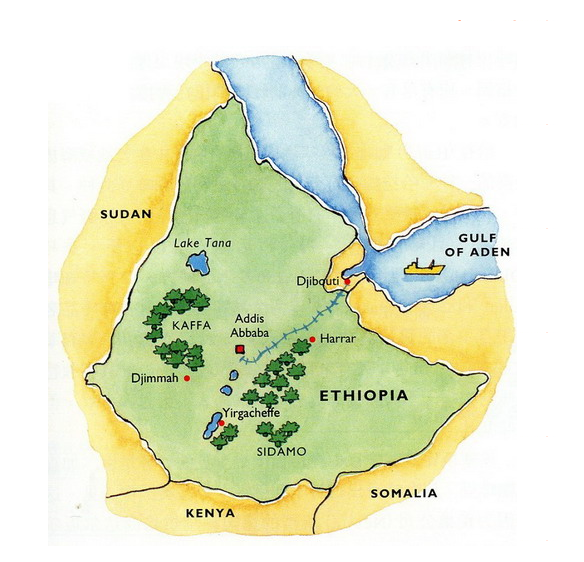
What coffee producing areas are there in Ethiopia? Ethiopian Coffee beans Story
Professional coffee knowledge exchange more coffee bean information Please follow Coffee Workshop (Wechat official account cafe_style) Coffee originated in East Africa in Ethiopia, and there are as many as 5,000 wild coffee bean varieties found in the forest of the Kaffa region in the south. It is generally believed that Ethiopia is the birthplace of coffee. Local residents found that cattle and sheep grew a kind of red fruit after eating.

Introduction to the characteristics of Ethiopian Coffee Flavor Manor with suitable mellow intensity
In July 1991, EGF hosted a national conference with the participation of more than 20 political and ethnic organizations. The meeting adopted the Transitional Charter and elected an 87-member House of Representatives, with EGF Chairman Meles Zenawi as President of the Transitional Government and President of the House of Representatives. A transitional government was established. On May 24, 1993, Eritrea (formerly Eritrea Province of Ethiopia) adopted the International Community.

A brief introduction to the Ethiopian ECX trading system that manages the export of Ethiopian coffee
Ethiopia is the country where coffee was first discovered, and it is still the most important and best producer of coffee in terms of quality and output. Coffee is mostly traditional Arabica species, with an annual output of about 350000 tons and more than 70% of which are exported to countries around the world. About 15 million people in the country are engaged in coffee-related industries, and more than 90% of the farms or cooperatives are planted in small areas.
African Coffee Manor Ethiopian Yirgacheffe Coffee Green Bean Yirgacheffe G 2 Wash
Chinese Name: Ethiopia Yirgacheffe Green Bean English Name: Ethiopia Yirgacheffe G.2 Commodity Specification: 1000g Coffee Country: Ethiopia Growing Elevation: Above 1, 600m Coffee Grade: Grade 2 Processing Method: Washing Roasting Degree: Medium (city Roast+)/Depth Why is it called Yirgacheffe? A lot of friends are asking us, from above

A brief introduction to the treatment method of grinding degree and baking degree of Ethiopian boutique coffee beans with multi-level taste
[washed Sidamo]: coffee raw bean green is slightly gray, some places are thick and some places are small, the acidity is soft and strong, mellow, sweet and spicy, it is one of the courtyard coffee in the highlands of southern Ethiopia. Unlike ordinary African coffee, Sidamo has clear acidity, smooth taste, and exquisite floral smell. Coffee beans must be harvested.

Introduction to the taste characteristics of varieties treated by flavor description of Ethiopian Sidamo coffee beans
Introduction to the taste characteristics of the Ethiopian Sidamo coffee bean flavor description method Korate won the first place in the Ethiopian limited cup sun exposure group with a score of 91.9. the overall flavor is quite similar to the first prize in last year's limited cup sun exposure group-Amaro Gayo. The dried aroma after grinding is dominated by very sweet blueberry aromas with rising floral aromas and a hint of cinnamon.

Ethiopian Coffee Bean Sidamo Coffee Bean Flavor Ted Manor
Hara is located in the Eastern Highlands of Ethiopia (Harerge Province) and grows between 5000 and 7000 feet above sea level. A century ago, it was still wild on the slopes. Most of the raw beans are medium size and long at both ends, with yellowish or golden green color, strong chocolate smell when baking, wild taste with moderate acidity and rich texture. It is a very typical mocha flavor and good Hara belt.

Ethiopian coffee producing area of Sidamo
According to the above four different modes of production, Ethiopian coffee can be divided into nine major coffee producing areas, including five boutique coffee areas: Sidamo, Yegashefi, Harald, Lim and Lekampu. and four general commercial bean producing areas: Gemma, Irugbo, Tibby and Bekaa. The sun or water washing methods are used in each district, and different treatment methods also affect the flavor.

Gucci Ethiopia G1
Ethiopian Coffee Flavor description introduces Ethiopian Sidamo as a type of single origin that grows in Arabica coffee in Sidamo Province, Ethiopia. Like coffee in most African countries, Ethiopian Sidamo is characterized by small gray beans, but characterized by its rich, spicy, wine or chocolate-like taste and floral aroma. Of all the Sidamo coffee, the most

Flavor description of Coffee beans in Sidamotad Manor, Ethiopia
There are mainly mountain plateaus in Ethiopia, and the central and western regions are the main part of the plateau, accounting for 2% of the whole territory. The East African Rift Valley runs through the whole territory, with an average elevation of nearly 3000 meters, which is known as the roof of Africa. The terrain around the plateau is gradually declining. The Darol depression in the north fell to 113 meters below sea level, the lowest point in the country. A narrow banded plain along the coast of the Red Sea
What are the main producing areas of Ethiopian coffee?
The Eastern Highlands of Ethiopia (Harerge province), which grows between 5000 and 7000 feet above sea level, was still wild on slopes a century ago. Raw beans are mostly medium size and long at both ends, with yellow or golden green color, strong chocolate smell when baking, wild taste with moderate acid and rich texture, very typical mocha flavor, good Hara with jasmine flowers.

Introduction to the characteristics of the method of grinding degree treatment for Ethiopian coffee with rich alcohol thickness
Ethiopia produces between 200000 and 250000 tons of coffee each year. Today, Ethiopia has become one of the largest coffee producers in the world, ranking 14th in the world and fourth in Africa. Ethiopia has a unique flavor that is different from other flavors and provides customers all over the world with a wide range of taste choices. In the southwest of Ethiopia
Baking Ethiopian sun Yegafeine aricha longan jujube honey sweet flavor
Boutique coffee has a rich and beautiful taste. Even if the coffee made of boutique coffee beans is not all fine coffee, it depends on whether it gives full play to the characteristics of coffee beans, whether it has a good taste, if not, it can not be called boutique coffee. The term boutique coffee was first coined by Ms. Knudsen of the United States in Coffee and Tea magazine, when

Ethiopian coffee | what coffee beans are used for hand-made coffee? Yega-Elba Coffee Cooperative
Professional coffee knowledge exchange more coffee bean information please follow coffee workshop (Wechat official account cafe_style) Ethiopia is the country where coffee was first discovered. Today, there are still many wild coffee picked and used by farmers in the virgin forest. Ethiopia is a country with poverty, drought and civil war, but it is still the most important coffee in terms of coffee quality and output.

Introduction to the characteristics of Ethiopian Coffee Flavor Manor with soft acidity and rich alcohol thickness
Although the Ethiopian Yirgacheffe coffee is petite, it is gentle and delicate and sweet. As the hometown of coffee, thousands of years of planting history and processing tradition in Ethiopia have created high-quality washed Arabica beans. Light baking has unique sweet aromas of lemon, flowers and honey, soft acidity and citrus flavors, fresh and bright on the palate. No.

Ethiopian Coffee Shachisaw Flavor Description Brand Recommendations Taste Introduction
Ethiopian Coffee Shakiso Region Flavor Description Brand Recommendations Taste Introduction Outstanding Central American origin, two brands located on both sides of the mountain range, showing a very different style. El Cielito's Csar Fernandez coffee has fruity aromas of cranberries, raisins and apricots, while San Luis Plane's Mariano Mejas coffee is more green and red.

Ethiopian coffee Starbucks Ethiopian coffee appearance
Professional coffee knowledge exchange more coffee bean information please follow the coffee workshop (Wechat official account cafe_style) since the 1960s, coffee began to move from fast food products to quality products. Starbucks added experience attributes to the functional attributes of its products, expanding from 1000 stores to 13000 stores in the 10 years from 1997 to 2007. The third coffee around 2003

Introduction to the characteristics of several major coffee producing areas in Ethiopia: the name of the manor, the description of flavor, the degree of grinding
Ethiopian coffee grows on the plateau of western Ethiopia at 4900-5900 feet (Wollega province) above sea level, north of Gima, mostly wild, with an annual output of about 500000bags/60kg, mostly exported by G5/G4, with beans larger and longer than Longberry, brownish in green, similar to less jasmine tea, more bitter, lack of rising Hara, slightly sour, slightly fruity and wine.

Longer than the southernmost Ethiopian plateau between 4600-7200 feet above sea level (Sidamo province) to the west
Sidamo grows in the southernmost Ethiopian plateau between 4,600 - 7,200 feet above sea level (Sidamo province). It is a famous boutique coffee area in southern Ethiopia, bordering Kenya, southeast of Gemma, due south of the capital. It is usually sweeter and more popular than most people. Its annual production is about 225000 bags/60kg. The beans are smaller than Longberry, green and gray.

Fruity and citrus flavor of boutique coffee beans in Ethiopia's Yega Ficher Manor.
At first, Yejassefi's coffee trees were planted by European monks, and later by farmers or cooperatives. Yega Xuefei is actually constructed by the surrounding coffee communities or cooperatives, including: Hafusha, Hama, Biloya. These mountain villages are foggy, like spring all the year round, with a gentle breeze in summer, cool but not hot, rain but not damp, and no cold damage in winter.